
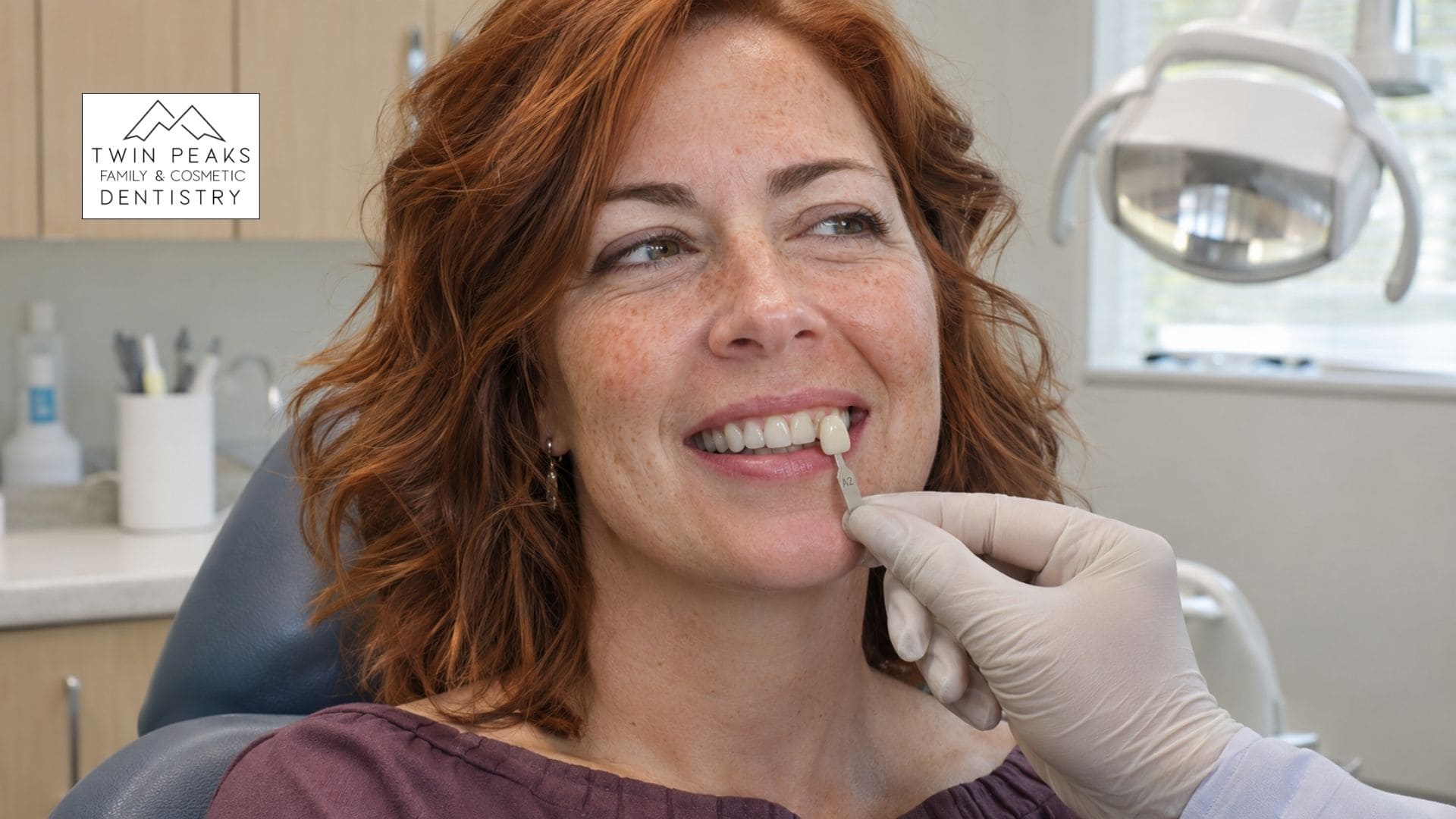
If you have a crown or veneer and are thinking about whitening your smile, one detail can affect the final result: dental restorations (such as crowns or veneers) do not respond to bleaching the same way natural teeth do.
Teeth whitening can lighten natural tooth structure, but it does not whiten the color of crowns or veneers. If the surrounding natural teeth become lighter, an existing restoration may look darker or more noticeable afterward. That does not automatically mean you need to replace it, but it is worth discussing shade matching with your dentist before starting treatment.
Can Teeth Whitening Whiten Crowns or Veneers?
No. Conventional teeth whitening does not change the established color of crowns or veneers the way it can lighten natural teeth. Whitening agents work on discoloration within natural tooth structure, while restorative materials retain their existing shade. This can create a visible color difference after surrounding teeth become lighter.
The American Dental Association explains that only natural teeth respond to bleaching and that tooth-colored restorations, including crowns, do not change color during whitening treatment.
This distinction matters whether you have:
- a crown on a front tooth
- one or more porcelain veneers
- tooth-colored restorations in a visible part of your smile
- restorations that were originally matched to a darker tooth shade
For example, imagine that a crown was made to blend with your surrounding teeth several years ago. If those natural teeth are later whitened several shades, the crown will generally remain at its original shade. What once matched closely may become easier to notice.
Does whitening damage the color of the restoration?
The main shade concern is generally not that whitening will make the crown or veneer lighter. Instead, the natural teeth around the restoration may change while the restoration does not.
That is one reason a dental examination before whitening can be useful. The ADA recommends evaluating existing restorations as part of whitening treatment planning because differences between natural teeth and restorations can affect the cosmetic result.
Twin Peaks Family & Cosmetic Dentistry also includes a dental review as part of its professional teeth whitening process so the teeth and gums can be evaluated before treatment.
How Do Dentists Plan Whitening When You Already Have a Crown or Veneer?
A dentist may first identify which visible teeth are natural and which contain restorations, compare their current shades, and discuss how much color change you hope to achieve. The goal is to anticipate whether whitening the natural teeth could create a mismatch with an existing crown or veneer.
The recommendation depends on your individual smile rather than simply whether a restoration is present.
A dentist may consider:
- where the crown or veneer is located
- how visible it is when you smile
- how closely it currently matches neighboring teeth
- the starting shade of your natural teeth
- how much lighter you want your teeth to appear
- the age and condition of the restoration
- whether other visible restorations are also present
A crown on a back tooth, for example, may have little effect on the appearance of your whitened smile. A crown or veneer on a front tooth may require more careful shade planning because small differences can be easier to see.
Should whitening happen before getting a new crown or veneer?
When a new visible restoration is already being considered, the order of treatment can become important.
Whitening the natural teeth first may allow the dentist to select the shade of a future crown or veneer based on the lighter tooth color. Once a restoration has been fabricated to a specific shade, later bleaching of the surrounding natural teeth will not lighten that restoration.
The exact sequence should be individualized. Whitening results, existing dental conditions, treatment timing, and the location of the restoration can all influence the plan.
This is different from deciding how to care for an existing veneer over time. Routine veneer maintenance is a separate topic and does not determine whether natural teeth can be whitened around the restoration.
What Happens If Your Crown or Veneer Looks Darker After Whitening?
If an existing crown or veneer appears darker after whitening, the next step is usually to evaluate the actual shade difference rather than assume the restoration must be replaced. The visibility of the mismatch, the condition of the restoration, your cosmetic goals, and the position of the tooth all influence what may be appropriate.
Sometimes the difference may be minor enough that no further treatment is necessary. In other cases, a visible front restoration may no longer blend as closely with the newly whitened natural teeth.
A dentist may ask questions such as:
- Are you satisfied with the overall whitening result?
- Does the restoration look noticeably different in normal lighting?
- Is the crown or veneer otherwise healthy and functioning well?
- Is the shade difference noticeable when speaking or smiling?
- Are additional cosmetic changes already being considered?
These questions help separate a true treatment need from a minor cosmetic difference.
Replacing a healthy restoration purely because of shade is a decision that should be considered carefully. A crown or veneer serves more than a cosmetic purpose, and changing it involves additional dental treatment. The appropriate recommendation depends on the individual tooth and the patient’s goals.
Why shade planning before whitening can help
Discussing restorations before bleaching gives you a clearer idea of what whitening can and cannot accomplish.
The ADA recommends a dental examination before bleaching when appropriate because existing restorations, oral health, sensitivity, and the causes of discoloration can all affect whitening treatment and expectations.
For patients considering teeth whitening in Longmont, Twin Peaks Family & Cosmetic Dentistry can evaluate existing crowns, veneers, and natural teeth before discussing a whitening plan. If your broader goal involves changing the appearance of several teeth, the practice’s cosmetic dentistry services can also provide context for how different treatments may need to be sequenced.
Frequently Asked Questions
Will whitening strips whiten a dental crown?
No. Whitening strips may lighten natural teeth, but they do not change the established color of a dental crown. If the surrounding natural teeth become lighter, the crown may appear darker by comparison.
Can you whiten your teeth if you have veneers?
Having veneers does not automatically mean that all whitening is inappropriate, but the veneers themselves will not become lighter. A dentist should evaluate which teeth are natural, where the veneers are located, and whether whitening could create an unwanted shade difference.
Should I replace a crown just because I want whiter teeth?
Not necessarily. A dentist can first evaluate the crown, its location, its current shade, and the amount of whitening you want. If the crown remains healthy and the color difference is small, replacement may not be necessary. If a visible mismatch becomes important to you, your dentist can discuss appropriate options.
Final Thoughts
Teeth whitening can change the shade of natural teeth, but it cannot make an existing crown or veneer match automatically. That is why restorations should be considered before whitening begins rather than after the surrounding teeth have already become lighter.
If you already have crowns or veneers, the most useful question is not simply, “Can I whiten my teeth?” It is, “How will whitening affect the way my natural teeth and restorations look together?”
Twin Peaks Family & Cosmetic Dentistry in Longmont, Colorado can evaluate your existing restorations, discuss your desired shade, and help you understand how whitening may affect the overall appearance of your smile before you decide how to proceed.